In the 1920's, the movie business was nearing its peak in the American entertainment scene. Of course, this rise would rarely give way to drastic pitfalls, but, for the time, movies were an integral part of the American society. "Hollywood" had a mystical significance when it was used in passing. For many, making it to Hollywood was its own version of the American Dream. What has evolved into a complex affair filled with special effects and advanced mechanics started as a simple motion picture. In their genesis, movies were shot in black and white film and were unable to incorporate audio into the performance. As dreary as this sounds to the modern citizen, the idea of a picture that could move was revolutionary, at the time. Needing to add in slides that displayed text to explain what a character had just said was overlooked-- the object on screen could move after all. Eventually, though, technology as it always does developed a new form of movie called a "talkie." Talkies were motion pictures that were able to capture an actor/actress's speech rather than having to create a separate slide for speech recap. Many actors and media consumers were skeptical of the talkies projected success, but nevertheless, they found their footing in the movie scene and through time, evolved into the movies we have to pleasure of viewing today.
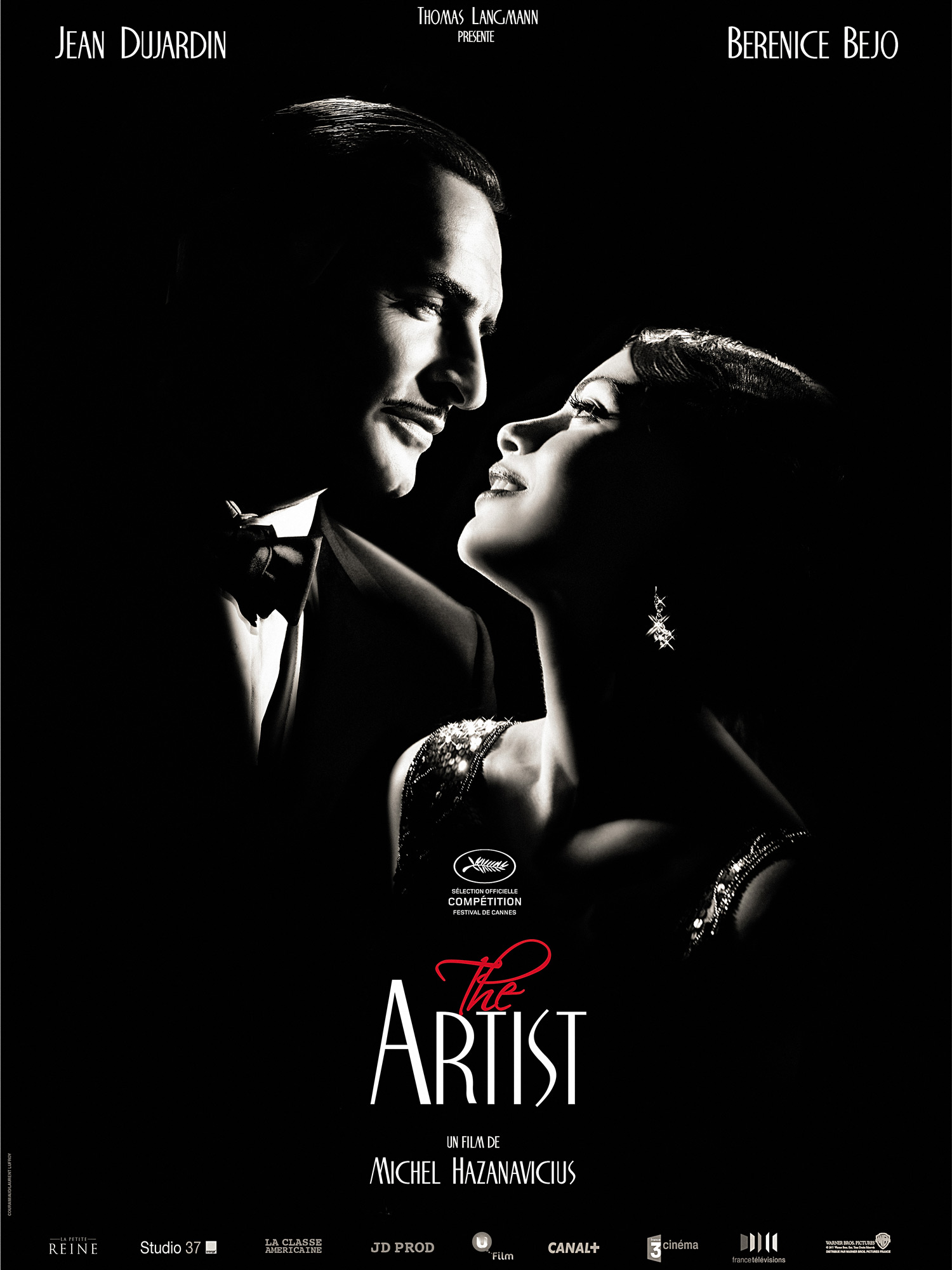
There are times when it is necessary to embrace progress, as well as there are times when it's ideal to deny it. There are also times when it's important to strike a delicate balance: agree and move with the eventual progression of society while taking the time to properly appreciate what gave way to the present. The Artist fits itself in the category of compromise. This is not a movement against the evolution of movies, and it will not go about convincing you that "older is better"; but it will take you for a journey through the past and allow you the understand that movies did not begin in color or with magnificent, computer-generated explosions. To begin, the acting is absolutely superb. I have never been so captured by an actor or an actress in the way that I was by Jean Dujardin (George Valentin) and Bérénice Bejo (Peppy Miller). One could argue that this degree of investment was due to their need to overact to convey emotion in the absence of voice, but that's beside the point. What is important to understand is that this movie contains some of the most enthralling and brilliant acting I've witnessed in a long time. This professional degree of acting was shared by the entire cast. Minor characters were just as invested in the story as the main characters, a very refreshing look at movies, in my opinion. The writing crew also deserves an honorable mention. The script and dialogue (from what I could read) was extremely clever and well thought out.
The cinematography in The Artist was simply genius. Direction, by Michel Hazanavicius, was extremely well done and was somehow able to capture that old time charm while incorporating modern filming techniques. The setting was very convincing and well constructed and the props used helped genuinely capture the period of the story. This film really deserves its place in the running for best picture this year.
This movie is very campy and plain fun. The story line is a classic love story: a piece is caught in the past while the other struggles to work in the present. There is nothing inappropriate about this movie in any way, shape, or form. That said, I would not necessarily recommend this movie to a younger audience. This movie requires the utmost attention from its viewers. What's different about this movie from others is that every hand movement, gesture, facial expression, and title screen plays a huge role in constructing a character and helping with the flow of the story. Of course, many younger people may be able to hold their attention for the (rather short) hour and a half, but there is also the problem with lack of appreciation. I have a tenuous grasp of the early American film scene at best, but after seeing the movie, I looked into the accuracy of the production and found that somehow, The Artist is a concrete solid representation of the silent film, built to mirror its early predecessors exactly. Other's may find that their absence of understanding makes the film boring and uninteresting. I'm not saying a child audience is improbable and unacceptable, but it is a little less than ideal.
One thing to keep in mind before entering the theater is that attention is key. Very subtle movements have big significance in the grand scheme of things. Another thing is that you should always be on your toes. There are some very drastic twists towards the end of the film that may be predictable if you really pay close attention.
Ratings:
Direction: 4/4 - I don't always give perfect scores, but when I do, (I drink Dos Equis) it means that the fulfillment of the category is truly phenomenal. The direction is stunning and really deserves all the acclaim that is and will be coming its way.
Casting: 4/4 - The cast was brilliant! The leads were both compelling to watch and the supporting characters played their roles marvelously.
Acting: 4/4 - For a silent film, I found that I actually enjoyed the over compensation aspect to the acting. In retrospect, I understand why many silent film actors/actresses were axed from their careers in the wake of talkies; they could not grasp the concept of subtlety on screen.
Effects/Art Direction: 3/4 - Granted this was not the category it was meant to succeed in, it was still suited the movie well. The art direction was very complex and interesting even though the effects were extremely limited.
Promotion: 2.5/4 - I saw one commercial for this at best. Yes, there were various posters at a couple of movie theaters, but that is simply not enough.
Length: 3.5/4 - Usually, I complain about the movie being too long or moving too slowly in a short time frame. This time, I'm a little annoyed that the movie wasn't a bit longer. There were a couple of pacing issues, but overall it commanded its time slot for every second.
Here's the trailer:
There are times when it is necessary to embrace progress, as well as there are times when it's ideal to deny it. There are also times when it's important to strike a delicate balance: agree and move with the eventual progression of society while taking the time to properly appreciate what gave way to the present. The Artist fits itself in the category of compromise. This is not a movement against the evolution of movies, and it will not go about convincing you that "older is better"; but it will take you for a journey through the past and allow you the understand that movies did not begin in color or with magnificent, computer-generated explosions. To begin, the acting is absolutely superb. I have never been so captured by an actor or an actress in the way that I was by Jean Dujardin (George Valentin) and Bérénice Bejo (Peppy Miller). One could argue that this degree of investment was due to their need to overact to convey emotion in the absence of voice, but that's beside the point. What is important to understand is that this movie contains some of the most enthralling and brilliant acting I've witnessed in a long time. This professional degree of acting was shared by the entire cast. Minor characters were just as invested in the story as the main characters, a very refreshing look at movies, in my opinion. The writing crew also deserves an honorable mention. The script and dialogue (from what I could read) was extremely clever and well thought out.
The cinematography in The Artist was simply genius. Direction, by Michel Hazanavicius, was extremely well done and was somehow able to capture that old time charm while incorporating modern filming techniques. The setting was very convincing and well constructed and the props used helped genuinely capture the period of the story. This film really deserves its place in the running for best picture this year.
This movie is very campy and plain fun. The story line is a classic love story: a piece is caught in the past while the other struggles to work in the present. There is nothing inappropriate about this movie in any way, shape, or form. That said, I would not necessarily recommend this movie to a younger audience. This movie requires the utmost attention from its viewers. What's different about this movie from others is that every hand movement, gesture, facial expression, and title screen plays a huge role in constructing a character and helping with the flow of the story. Of course, many younger people may be able to hold their attention for the (rather short) hour and a half, but there is also the problem with lack of appreciation. I have a tenuous grasp of the early American film scene at best, but after seeing the movie, I looked into the accuracy of the production and found that somehow, The Artist is a concrete solid representation of the silent film, built to mirror its early predecessors exactly. Other's may find that their absence of understanding makes the film boring and uninteresting. I'm not saying a child audience is improbable and unacceptable, but it is a little less than ideal.
One thing to keep in mind before entering the theater is that attention is key. Very subtle movements have big significance in the grand scheme of things. Another thing is that you should always be on your toes. There are some very drastic twists towards the end of the film that may be predictable if you really pay close attention.
Ratings:
Direction: 4/4 - I don't always give perfect scores, but when I do, (I drink Dos Equis) it means that the fulfillment of the category is truly phenomenal. The direction is stunning and really deserves all the acclaim that is and will be coming its way.
Casting: 4/4 - The cast was brilliant! The leads were both compelling to watch and the supporting characters played their roles marvelously.
Acting: 4/4 - For a silent film, I found that I actually enjoyed the over compensation aspect to the acting. In retrospect, I understand why many silent film actors/actresses were axed from their careers in the wake of talkies; they could not grasp the concept of subtlety on screen.
Effects/Art Direction: 3/4 - Granted this was not the category it was meant to succeed in, it was still suited the movie well. The art direction was very complex and interesting even though the effects were extremely limited.
Promotion: 2.5/4 - I saw one commercial for this at best. Yes, there were various posters at a couple of movie theaters, but that is simply not enough.
Length: 3.5/4 - Usually, I complain about the movie being too long or moving too slowly in a short time frame. This time, I'm a little annoyed that the movie wasn't a bit longer. There were a couple of pacing issues, but overall it commanded its time slot for every second.
Here's the trailer:

No comments:
Post a Comment